Friday, October 14, 2016

The Power of Thinking (October 9, 2016)


I hated Long division when I was a kid. It gave me a stomach ache and a head ache. I remember going to my mom one night in a fit of despair over my math homework. When she offered to help, I handed over a sheet so muddy with partially erased pencil marks that she responded “ah, I see your problem- let’s start with a clean sheet of paper.” She pulled a fresh sheet, and a nice sharp pencil. She re-wrote the first problem on the clean page, and began to write each step down as we worked on it together. Teachers had always told us “show your work so we know how you solved it” but all of a sudden I realized that really, if I could show my work in a way that was legible and understandable to me, then I could understand what I had done, and when I struggled, where I’d gone wrong, so I could check my work and be sure that I was right. All of a sudden I loved math. I loved that you could take a clean sheet of paper and a sharp pencil and follow the numbers to their logical conclusion.

This is the power of our thinking minds. It takes fear and confusion and overwhelming emotions and slows everything down to where we can see clearly what our solutions might be. In our political environment right now strong emotions cloud the issues. Our public discourse is more about “who is the enemy” than “what is the most effective path forward for all of us.” And we need real solutions right now, not just emotional rhetoric.

This image found on LaughingSquid pretty much sums it up.
We live at a time where it is very hard to tell truth from lie, fact from guess. Have you ever seem something posted on Facebook- so outrageous that you immediately post it to all your friends, only to have someone point out that it was actually just a joke or a fabrication? How can we know what is true? This is especially important when it comes to public policy. We know that the effectiveness of any new laws passed by our elected officials is secondary to whether the idea increases their popularity, or will be popular with big donors. Things are not any better in private industry, where the ultimate measurement of success is quarterly returns to shareholders rather than the impact on 7 generations of life on our planet. Scientists who advise both government and industry are routinely silenced because what the scientists are telling us isn’t popular. [i] For the future of our country, I’d like to suggest that it is the power of thinking that can cut through the politics and the partisan passions and help us steer our way forward.

For an example today, let’s use something that should be pretty safe for both liberals and conservatives. Imagine we were buying a new couch for the congregation. Have you ever fallen in love with a piece of furniture – “wow- this is just the perfect thing!” and not until you got it home did you realize it doesn’t actually fit? Maybe later you get the bill in the mail for the couch and realized you can’t really afford it? The best way to prevent both these couch-fails is to check your numbers. Before you head to the showroom, measure the space where you want to put the couch. Then bring a tape measure to the store with you, and measure the couches. And because humans are imperfect, you might even want to measure twice; as my grandfather the cabinet maker used to say “measure twice cut once.” If it’s really important to you, have a friend measure it too. In the great hierarchy of information, this is the most trustworthy-- something you measure or count firsthand, and preferably having someone check your work. In the world of science, the secret code for “had my colleagues check my work” is “peer reviewed.” Look for that phrase – it’s a good sign that the data is pretty solid.

Hang on, you may be saying to yourself, can we afford a couch? Good question. So often we buy something because we need it, or we want it, or it seems like something we should be able to afford. This is why we always like to have a copy of our budget and our year-to-date expenditures at board meetings. Not only can I look at the budget and do the math, but the whole board has a copy, and we can check each other’s math. Now budget numbers are a little softer than how many inches a couch is. Just because we usually make $200 in fundraisers, doesn’t mean we will this year. Just because we usually spend $1000 on heat, doesn’t take into account a record cold winter. Just because it is a number on an impressive spreadsheet doesn’t make it true. So part of checking each other’s work is asking questions about the numbers “where did you get these estimates for how much our utilities will be this year” and “what are our plans for this fundraiser?”

What do you do if you can’t get to the store to measure the couch yourself? If you are going to order the couch on line, you are probably going to have to trust someone else to measure it for you. Most of the data we get comes to us in a secondary way like this. Exactly how many children graduated from high school last year? How many inches did it rain during the hurricane? No one has time to go count all these things for themselves. At some point you’re going to have to trust a pharmacist to measure your drugs, or an engineer to design your bridge. Choose your expert carefully. Choose them not because they share your political affiliations, but because they check their work and use a good method. We make this mistake a lot- we might trust our Facebook friends before we trust a careful peer-reviewed study by a researcher who voted differently in the last election. For example, I hope most of you trust me and agree with some of my values. But if you really want to know how a couch is made, I hope you’ll ask [our Buildings and Grounds Team] instead. And if you want to know if we can afford a couch, start with your treasurer.

But don’t give all your trust unquestioningly to the experts, even our beloved church treasurers. Ask questions about who did the counting and how they did the counting. One of the most universally accepted standards for gathering information is the scientific method, which Aurelio described before. Part of that process is explaining exactly what method you used to get your measurements. You can use the word “methodology” if you want to be fancy about it. “I took this tape measure and I measured the back, from one end to the other” and then the scientist has to show their math. Now someone else (maybe far across the country, maybe in another decade) can take the same kind of tape measure, and the same kind of couch, and check your math. An online poll does not use the scientific method. Your Uncle Bob eyeballing the couch from a photo is not the scientific method.

Learning about the method for getting the numbers, helps you know better what those numbers mean. As Susan Etlinger, who analyzes data for a living, said “if I don’t know what questions you asked, I don’t know what questions you didn’t ask.”[ii] Last week 14 of us were standing in the creek bed over by Litchfield Elementary School with Mike Lovegreen, while he explained that sometimes folks who design stream-crossings would calculate the volume of water that had to travel under a bridge, without asking “what happens to all the rocks and stuff in the creek-bed when we build this?” and “How is this bridge going to change the way the creek moves?” And that those un-asked questions often resulted in roads and bridges and parking lots washing out in big storms

Just because someone uses numbers in their Facebook post, doesn’t mean it’s a fact. I read somewhere that 70% of all statistics quoted in conversation are made up on the spot. But you might want to check that for yourself. So another important question you can ask is- who is the source of your data? If the Facebook post doesn’t tell you where the data came from, probably best to disregard it: if no one’s name is on it that means no one has to be accountable for errors or false information. If you are really curious ask for the source. Once you know the source, you know a lot about the data. The Onion is a satirical magazine – but I see my Facebook friends re-posting it like it’s real news. If you have data from a researcher at Stanford on one hand and from Buzzfeed on the other hand, I would suggest that probably the Stanford data is more rigorous. If I’ve found a couch that is the right measurements and the right price, and the review says “most comfortable couch in the world.” It makes a big difference who is the source of that quote- is it from a couch salesman, or from consumer reports? Ask yourself who benefits, whose pockets will be lined. If the only research about couch safety is done by the couch industry, that’s important to keep in mind. Not to say that the couch industry is not honest, just that they might be motivated to ask questions and collect the data that is more likely to help them sell couches.

You may find that the more questions you answer, the more you drill down into the data, the more questions you have. That means now you are really thinking! Some of you have told me that you are here in a UU church because you came from a religious tradition where asking too many questions was frowned upon. Well, you came to the right place. Asking questions is practically a sacrament for UUs.

UUs are encouraged to “to heed the guidance of reason and the results of science, [which] warn us against idolatries of the mind and spirit;” UUs understand that no information is perfect. Very fallible human beings bring their biases and blind spots to the work they do. If I really want a certain couch for the church, research has shown that I’m likely to pick and choose data that supports my arguments for buying it.[iii] No measurement is perfect. Every answer is incomplete. So the use of reason and the scientific method helps us challenge the data we have and the conclusions we draw, and the more we challenge those theories the stronger they become.

The Galileo story I read during the Lesson for All Ages is one of how gathering new data and questioning our assumptions can change how we see the world. I can see clearly, that every morning the sun rises in the east, and sets in the west. It’s just common sense that the sun goes around the earth. So in the 16th century when Nicolaus Copernicus, came up with a mathematical model which suggested that actually we went around the sun, people were slow to believe it. no matter how good his math was he could not convince people to question their old idea. When Galileo Galilei found new data using a telescope he designed- society pushed back hard, the church asked him to cease and desist, making his life very difficult. Today the idea of the earth orbiting the sun is very uncontroversial- even ordinary people can see for ourselves images from space. Centuries of science confirms the basic idea, and in 1992 the Catholic Church finally changed the official stance to agree that Galileo was right.

But that’s not the end of the story. Astronomers like William Herschel and Friedrich Bessel realized that the sun is only the center of the solar system, not the whole universe. In fact, the latest theory is that the universe has no center, or rather that everywhere is the center of the universe. At its best, the use of science and reason helps us understand that our knowledge is always incomplete, always growing. It helps us be open to new ideas and new data, because even when an idea seems weird, seems to contradict what we know, we can cool down our gut reaction, and start asking helpful questions.

Reason and the scientific method can tell us many things, about the measurements of the couch, the affordability of the couch, maybe the durability of the couch if we know something about materials and engineering, but couch that is the right measurement on the right part price is not a necessarily the right couch for you. As a short person I can tell you that just because something is comfortable for 98% of people doesn’t mean that it will necessarily be comfortable for me. Thinking alone will not give you all the answers. Do you like the couch? Is it beautiful? Is it comfortable? Those are important questions too. We should use all our faculties - heart mind and spirit in making any important decision.

We are living in is an important time in the history not only of our country, but for all the living beings on this planet. As a people who strive to heed the guidance of reason and the results of science, we have an important role to play. Let us be on the side of all those who, regardless of their political affiliation, are gathering data carefully, who show their math and their methodology so others can join in the search for solutions. Let us remember to ask good questions as part of our free and responsible search for truth and meaning, and let us use the power of our thinking minds always in service of our compassionate hearts, and a better life for all.


Thursday, September 22, 2016

All This Useless Beauty (September 18, 2016)


The title comes from a song by the same name by Elvis Costello

Reading: from Denis Dutton “A Darwinian theory of beauty “

… the experience of beauty is one of the ways that evolution has of arousing and sustaining interest or fascination, even obsession, in order to encourage us toward making the most adaptive decisions for survival and reproduction. Beauty is nature's way of acting at a distance, so to speak. I mean, you can't expect to eat an adaptively beneficial landscape. It would hardly do to eat your baby or your lover. So evolution's trick is to make them beautiful, to have them exert a kind of magnetism to give you the pleasure of simply looking at them.

Consider briefly an important source of aesthetic pleasure, the magnetic pull of beautiful landscapes. People in very different cultures all over the world tend to like a particular kind of landscape, a landscape that just happens to be similar to the pleistocene savannas where we evolved. … open spaces of low grasses interspersed with copses of trees. The trees, by the way, are often preferred if they fork near the ground, that is to say, if they're trees you could scramble up if you were in a tight fix. The landscape shows the presence of water directly in view, or evidence of water in a bluish distance, indications of animal or bird life as well as diverse greenery and finally -- get this -- a path or a road, perhaps a riverbank or a shoreline, that extends into the distance, almost inviting you to follow it. This landscape type is regarded as beautiful, even by people in countries that don't have it. The ideal savanna landscape is one of the clearest examples where human beings everywhere find beauty in similar visual experience.


Reading : From Braiding Sweetgrass “ASTERS AND GOLDENROD”

People flock to our hills for the fiery suite of October but they often miss the sublime prelude of September fields. As if harvest time were not enough—peaches, grapes, sweet corn, squash—the fields are also embroidered with drifts of golden yellow and pools of deepest purple, a masterpiece.

If a fountain could jet bouquets of chrome yellow in dazzling arches of chrysanthemum fireworks, that would be Canada Goldenrod. Each three-foot stem is a geyser of tiny gold daisies, ladylike in miniature, exuberant en masse. Where the soil is damp enough, they stand side by side with their perfect counterpart, New England Asters. Not the pale domesticates of the perennial border, the weak sauce of lavender or sky blue, but full-on royal purple that would make a violet shrink. The daisylike fringe of purple petals surrounds a disc as bright as the sun at high noon, a golden-orange pool, just a tantalizing shade darker than the surrounding goldenrod. Alone, each is a botanical superlative. Together, the visual effect is stunning. ... I just wanted to know why.

Why do they stand beside each other when they could grow alone? Why this particular pair? There are plenty of pinks and whites and blues dotting the fields, so is it only happenstance that the magnificence of purple and gold end up side by side? Einstein himself said that "God doesn't play dice with the universe." What is the source of this pattern? Why is the world so beautiful? It could so easily be otherwise: flowers could be ugly to us and still fulfill their own purpose. But they're not. It seemed like a good question to me. [p. 40-41]


Sermon -All this Useless Beauty

As I drive down 34 winding by creek beds from Ithaca down into the Valley, I think that maybe we live in the most beautiful place in the world. Especially on a day like this, when the hills are green, and the fields are filled with yellow. Last night's rain has left everything fresh and shining.

I’m not going to try to define beauty today, I’ll leave that to the philosophers, but we know it when we see it, don’t we? Take a moment and call to mind something you find beautiful.

Robin Wall Kimmerer asks “why is the world so beautiful? It could easily be otherwise?” It's a good question. Let’s start with evolutionary biology, because scientists like Denis Dutton have wondered this same thing and answered:
“ the experience of beauty is one of the ways that evolution has of arousing and sustaining interest or fascination, even obsession, in order to encourage us toward making the most adaptive decisions for survival and reproduction. … evolution's trick is to make them beautiful, to have them exert a kind of magnetism to give you the pleasure of simply looking at them.[iii]”
Scientists tell us that beauty- our capacity to experience some things as beautiful, is an evolutionary adaptation that grabs our attention, that redirects us towards conditions necessary for life.

Take, for example, that combination of flowers that Dr. Kimmerer finds so beautiful, the goldenrod and the asters:
“… the visual effect that so delights a human like me may be irrelevant to the flowers. The real beholder whose eye they hope to catch is a bee bent on pollination. Bees perceive many flowers differently than humans do due to their perception of additional spectra such as ultraviolet radiation. As it turns out, though, goldenrod and asters appear very similarly to bee eyes and human eyes. We both think they're beautiful. Their striking contrast when they grow together makes them the most attractive target in the whole meadow, a beacon for bees. Growing together, both receive more pollinator visits than they would if they were growing alone.” [p. 47]
So beauty is not an accident of biology, it’s part of how we survive as a species and as individuals.

In his recent Encyclical on the environment, Pope Francis writes:
“By learning to see and appreciate beauty, we learn to reject self-interested pragmatism. If someone has not learned to stop and admire something beautiful, we should not be surprised if he or she treats everything as an object to be used and abused without scruple.” [p. 140]

Lets go back to the beautiful landscapes Dutton described in our opening reading. Human beings naturally look out over the endless mountains in the growing season and experience beauty. We experience it as beautiful in part because we can see just by looking at the landscape that this is a good place for humans to be- fertile plants and eco-systems sustaining abundant life, many sources of fresh water, and trees for shelter. The oldest part of us experiences the rightness of this place. We don’t need to teach our children to stand in wonder before the beauty of the endless mountains in autumn, but we can encourage them and affirm this natural inclination in them. Because if they only hear voices telling them the hills are only valuable if they are clear-cut for timber and drilled fossil fuel, they may stop listening to the deeper, older voice which sees the goodness and rightness and beauty of this land just as it is.

As Rabbi Abraham Heschel writes “awe is the beginning of wisdom”- awe teaches us humility, and gives us the space for circumspection. Appreciating the beauty of these hills is not a frivolous act, it is a wise act, good for not only the survival of our bodies but our souls.

We know somehow that beauty feeds the soul. That is why we have music during worship. That is why we have stained glass windows in our churches, why some of the most beautiful buildings in the world are houses of worship. Beauty stirs something deep in us, wakes up not only a longing for beauty, but empowers us to find beauty in ourselves, in our own lives.

What is the difference between something merely pretty and something beautiful? Perhaps beauty is deeper than the merely pretty. I believe it is the capacity to hold pain. Beauty does not tell us “cheer up and be happy”. I have a lingering memory from a spring long ago when I was a young adult, still planning to be an opera singer. I was walking across campus to the student medical center to meet with a counselor as I did each week, because I was depressed. I was lonely, and I didn’t really know it then, but I was coming to the end of my time as a singer, letting go of a dream I had dedicated my life to for many years. The path led through a grove of trees that were, covered with the first cherry blossoms of spring. The grove was big enough that I could be wholly surrounded by them for a few moments as I walked, and I was filled with gratitude, and awe, and sadness at their beauty. In that moment I felt cherry blossoms were the most poignant of flowers- because they are so fragile, so ephemeral; they bloom so quickly and then become a rain of petals on the ground. It occurred to me that sometimes beauty makes pain more bearable- it somehow gives the pain context and meaning. Life is so precious, and beautiful, and fragile and bittersweet I felt as I walked.

Consider today’s story- the story of a woman turned way at the village forced to sleep out in the cold, that’s not a happy story. But it is a beautiful story. Imagine that moment, laying on your back, waking up to moonlight reflected in the cherry blossoms. And such a moment, where the moonlight is reflected in the newly open blossoms. How fleeting and special a moment. Truly once in a lifetime. The beauty caused Rengetsu to pause in wonder and awe. Such is beauty. It transforms a moment, it transforms us.

When I used to live in Baltimore Maryland, I used to drive by the ugliest public housing building I had ever seen. I would say it looked like a prison, but I also drove by the prison on my way to work, and the prison had much more dignity and architectural integrity. After a year of driving by the building each day, and feeling my heart sink each time, it occurred to me “whoever designed that building had no respect for the inherent worth and dignity of the people who live in it.”

By way of contrast I’d like to show you a video to give you a sense of this center Strickland built. This is from his 2002 ted Talk


Strickland said on the Ted radio hour,
“ I have 400 kids from the Pittsburgh public school system that come to me every day of the week for arts education, and these are children who are flunking out of public school. And last year, I put 88 percent of those kids in college and I've averaged over 80 percent for 15 years. We've made a fascinating discovery. There's nothing wrong with the kids. For that, I won a big old plaque, Man of the Year in Education. I beat out all the PhD's because I figured that if you treat children like human beings, it increases the likelihood they're going to behave that way.”

 “When I think of beauty, I think of life and hope in all of its enormous possibilities. So that this beauty is not just for the imagination, it actually is a way of altering human behavior for the better. And so, this is a real practical example, a living example, of how beauty and aesthetic can transform a community that had literally been, in some ways, been given up on for dead.”[iv]

I want to show you another video, this one is about an artist Lily Yeh.


Lily began her career transforming an abandoned lot in the most disenfranchised part of Philadelphia, working with children and folks living on the street, empowering them to paint and sculpt and build an oasis with their own hands and hearts, using the most basic of materials - often recycling cast off materials. Lily demonstrated to that community that transformation was possible. She helped them find the beauty in themselves, and in their neighborhood.

In 2005 Lily went to Rwanda after their horrible genocide, believing, as you heard her say in that video ““beauty is intimately engaged with darkness, with chaos, with destruction. You need to walk into the darkness and hold it in your arms” So she went to Rwanda to walk with darkness and hold it in her arms. Much of what you saw in that trailer was about creating a proper place for the remains of villagers killed in the genocide. She said, seeing the concrete shed which housed those remains when she first came to Rwanda “It cannot be a grave- you cannot heal by looking at it. …There was no poetry, there was no beauty. I said, to truly honor the dead, we have to bring beauty and to remember them in that light…”[v]

And so she worked with the local government and with the local communities organizing the people who had suffered so much to transform the village of refugees, strangers to one another, into a place of color and vision.

She created a memorial for the dead where people could finally begin to grieve their unimaginable loss. Though years had passed since the horrific violence, the creation of a sacred space, made beautiful through hundreds of hours of the work of caring hands, allowed a new layer of healing to happen.

Part of what makes Lily Yeh’s work so special, is not simply her skill and vision as an artist, nor the fact that she chooses to make beauty in struggling places, but that she puts paintbrushes into hands that have never held brushes before. Lily Yeh is special because she empowers us to make the world more beautiful.

What good is beauty? Beauty has the power to invite us to look at the world in a new way, it invites us to awe and humility. Beauty is a balm for the healing of the soul.

Beauty’s invitation is simply to stop and stare. I encourage you today to give in to its seduction. You live in one of the most beautiful places in the world. Just look up in gratitude and awe. Listen when the wise evolutionary voice in your bones suggests the beauty of these endless mountains is good not only for lifting the spirit, but for the health of body and eco-system. Cherish and defend that beauty for your children and grandchildren.

In keeping with our mission, to live ethically, grow spiritually and serve lovingly, let us create beauty for and with our whole community. You already do this- the beautiful worship we offer each other, a salad with colorful vine –ripe tomatoes and vibrant squash blossoms. A front yard full of sunflowers. The vigil we held last spring for the shootings in Orlando- that was one of the most beautiful things I’ve ever been part of.

In gratitude for the beauty we experience, let us also advocate for beauty in our community, for art in our schools, for sunlight and sunflowers in dark places. Beauty it is not a luxury for the rich, but nourishment every soul needs.


[i] http://www.ted.com/talks/denis_dutton_a_darwinian_theory_of_beauty/transcript
[ii] https://www.goodreads.com/book/show/17465709-braiding-sweetgrass
[iii] http://www.ted.com/talks/denis_dutton_a_darwinian_theory_of_beauty/transcript
[iv] http://www.npr.org/templates/transcript/transcript.php?storyId=174728388


Tuesday, August 30, 2016

Universalism and the White Crow (August 28, 2016)


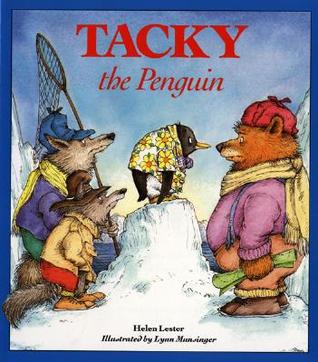
Have you ever felt like Tacky the Penguin?  Like the way you walk is different from the way the other people in your group walk? Like the songs you sing are different than the songs the others sing? Like everyone else is quiet and polite, and you are just too loud and tacky? Or maybe you feel the exact opposite, like everyone around you is exciting and interesting  and you are the only quiet one? Like you are an odd bird?
[open floor for examples]
When you are the outlier, like the only white crow in a world of black crows, you can start to get the impression that there’s something wrong with you. Whether you are the only poet in a group of scientists, or the only atheist in a congregation full of theists,  there can be a lot of pressure from your family, or congregation, or neighborhood to be like everyone else.  When I was a little girl, I had no trouble fitting in to my family- I was a bookish introvert among bookish introverts, a UU among UUs, a liberal among liberals. But as soon as I went off to school I knew something was wrong with me. I was a bookworm among kids who loves sports, I was a UU among fundamentalist Christians, and a liberal among conservatives. And my parents ran a music school instead of having a normal job like lawyer, or salesman or project manager.  I felt like Tacky pretty much all the time. As much as my peers pressured me to change, I just couldn’t figure out how to change into the person they wanted me to be.

It wasn’t until I went off to seminary, and took the battery of test they give all aspirants for UU ministry, one of which was the Meyer’s Briggs personality Type index, I learned that my type is called “INFJ” which represents less than 1% of the population.  I began to think of my differences not as character flaws to be fixed, but as unique gifts that I could use to serve the world in my own way. 
Our biological diversity, our psychological diversity, is important to the survival of the species. Each biological difference evolved to fill some niche in our eco system. The more diverse we are, the more prepared we are for a changing future, and for the survival of life itself. Consider that first living being to photosynthesize light into energy was undoubtedly an outlier, but that diversity was so useful, now plants fill our world.

The same is true of our personality differences. The world needs Introverts, who can spend large amounts of time alone doing that work best done in solitude, and the world needs extroverts, people who can spend all day engaged with other people. The world needs scientists and poets and farmers, the world needs people who notice the small details, and people who see the big picture. The world needs people who can follow a schedule and make plans, and the world needs people who can be spontaneous and improvise when the plan falls apart.

When he learned I was doing this sermon, my colleague Dan Harper sent me this poem by Edwin Markham, Universalist poet
They drew a circle that shut me out --
Heretic, a rebel, a thing to flout.
But Love and I had the wit to win:
We drew a circle that took them in.
Unitarian Universalism is a faith that draws a circle that includes all of us- even Tacky the Penguin

I remembered all this again the other day as I listened to a Podcast called “Personality Hacker” in which the hosts Joel Mark Witt and Antonia Dodge talked about how challenging it is to be outlier, and offered some advice:
1.     Permission. Give yourself permission to show up as yourself, to do what makes sense to you in the world. I have learned to recognize the signs of getting run down by too much time socializing, and find a way to get some time alone to recharged. When I am visiting my dad’s family, who are mostly introverts, there is a natural time in the day when everyone disappears to read or nap or practice their instrument, and I use that time to meditate or do yoga.  When I go visit extroverts, however, this can be mystifying, and bordering on rude. Where did Darcey go and when will she be back? Which leads us to #2-
2.     Protection. We odd birds need to be able to say “you can’t tell me who I am” We need protection from message that we are wrong for being different and from attempts to make us like everyone else.
3.     Communication. We are encouraged to proactively communicate why we are like this, where we are coming from. For example, now that I know I am an introvert, and that this is a perfectly okay thing to be, I was able to say to my colleagues this past week “I’m going to go get 20 minutes of introvert time before we start up again” and no one batted an eye.
4.     Healing. If your parents always made fun of you for reading a book instead of watching football with the family, or for being a vegetarian when the rest of the family ate the traditional American diet, you’ve probably got an Ouchy spot in your spirit around that. What could you do to honor that part of yourself, and to heal those old pains?

The great thing about growing up, is you get to find your people. A white crow among white crows is just one of the crowd. For example, after a lifetime of thinking I was literally the most liberal person on the planet, I moved to Berkeley California and began to feel pretty main stream.  
Being a white crow among white crows is a bit of a relief. This is the reason for Pride Days, for conferences, for affinity groups. To have a place where you can be yourself and no one looks at you like you have lobsters crawling out of your ears. TO talk the way you naturally talk and be met with understanding nots instead of blank stares. It feels comfortable to be an insider. It’s a form of privilege.

I wonder if you can think of any examples in your own life, where you have been part of the majority and noticed someone else who had trouble fitting in?
 [sharing]
Here at UUCAS, we often do things that I enjoy and feel comfortable with: Sitting quietly, thinking deeply, reading poetry, listening to music.  And folks in our congregation will approach me, often with great trepidation, to admit that these things sometimes make them feel like Tacky the penguin. “I don’t get poetry” a number of you have mentioned. or “I think I am the only Christian” or “I think I’m the only politically conservative person” or “Can I come to this potluck even though I’m not a vegan?”

Part of the reason the worship team does surveys, and the committee on Ministry does evaluations of church life is to make sure that the both the white crows and the black crows have a voice.  We are such a diverse group of people I bet every one of us has felt like Tacky the Penguin at some moment or other.  And in most circumstances what we expect people to do is adapt to the majority.
I think it’s important that part of our way of being as a congregation is to support people in being their authentic self. For Joel Mark Witt and Antonia Dodge there are 2 steps:
1.     Support the outliers in your family, your church, your office, in getting to their flow state part of every day. Make sure the extroverts get time socializing with people. Encourage children have trouble sitting still, make sure they get plenty of time to run around each day.
2.     Don’t thwart or frustrate their diverse needs.  When someone says something or does something  you don’t understand, probably it is coming from a radically different perspective than yours.  Have you ever been at a congregational meeting and someone asks that question that you just can’t understand why that would be important? If we say “what a thing to say!” or “that question is not important” We need to find ways of validating one another instead of dismissing their unique perspectives and needs. Because not only do each of us need to feel heard and understood, their unique perspective is important to the health and well being of our community. Remember Tacky the Penguin, whose  unique perspective saved the day.
When Antonia Dodge noticed that one of their sons was a different personality type than the rest of the family, they  realized “I can’t just act as if he is like the rest of us. I have to acknowledge and hold space for his being different.” They asked themselves “how do we accommodate him and honor him as a unique individual, while still making sure we don’t distance ourselves from who we are as a group.”

This brings me back to a quote by UU theologian Rebecca Parker that I’ve shared with you before-
“Love seeks to know the other as "other." Not as an extension of oneself, not as a reflection or as utilitarian presence to be there for one's use but as an other of sacred worth in the other's own rights. From the other's own perspectives, the other's own practices and values. Love seeks to know the other as other and to preserve and protect the just-so-ness, the "otherness" of the other.”
Whether people are different from us in their personality type, their politics, race or sexual orientation, as Universalists we cast a circle that takes them in. Not just in theory, but in our daily life together. By encouraging everyone’s unique gifts, and supporting each person’s unique struggles, we embody Universalism. Probably we are all odd birds in some way- but I happen to know that each of us is a very nice bird to have around