Tuesday, August 30, 2016

Universalism and the White Crow (August 28, 2016)


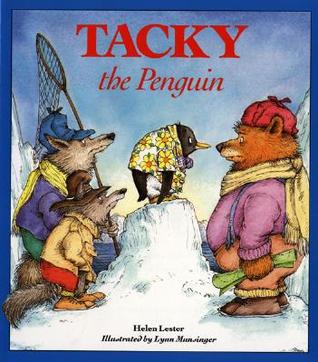
Have you ever felt like Tacky the Penguin?  Like the way you walk is different from the way the other people in your group walk? Like the songs you sing are different than the songs the others sing? Like everyone else is quiet and polite, and you are just too loud and tacky? Or maybe you feel the exact opposite, like everyone around you is exciting and interesting  and you are the only quiet one? Like you are an odd bird?
[open floor for examples]
When you are the outlier, like the only white crow in a world of black crows, you can start to get the impression that there’s something wrong with you. Whether you are the only poet in a group of scientists, or the only atheist in a congregation full of theists,  there can be a lot of pressure from your family, or congregation, or neighborhood to be like everyone else.  When I was a little girl, I had no trouble fitting in to my family- I was a bookish introvert among bookish introverts, a UU among UUs, a liberal among liberals. But as soon as I went off to school I knew something was wrong with me. I was a bookworm among kids who loves sports, I was a UU among fundamentalist Christians, and a liberal among conservatives. And my parents ran a music school instead of having a normal job like lawyer, or salesman or project manager.  I felt like Tacky pretty much all the time. As much as my peers pressured me to change, I just couldn’t figure out how to change into the person they wanted me to be.

It wasn’t until I went off to seminary, and took the battery of test they give all aspirants for UU ministry, one of which was the Meyer’s Briggs personality Type index, I learned that my type is called “INFJ” which represents less than 1% of the population.  I began to think of my differences not as character flaws to be fixed, but as unique gifts that I could use to serve the world in my own way. 
Our biological diversity, our psychological diversity, is important to the survival of the species. Each biological difference evolved to fill some niche in our eco system. The more diverse we are, the more prepared we are for a changing future, and for the survival of life itself. Consider that first living being to photosynthesize light into energy was undoubtedly an outlier, but that diversity was so useful, now plants fill our world.

The same is true of our personality differences. The world needs Introverts, who can spend large amounts of time alone doing that work best done in solitude, and the world needs extroverts, people who can spend all day engaged with other people. The world needs scientists and poets and farmers, the world needs people who notice the small details, and people who see the big picture. The world needs people who can follow a schedule and make plans, and the world needs people who can be spontaneous and improvise when the plan falls apart.

When he learned I was doing this sermon, my colleague Dan Harper sent me this poem by Edwin Markham, Universalist poet
They drew a circle that shut me out --
Heretic, a rebel, a thing to flout.
But Love and I had the wit to win:
We drew a circle that took them in.
Unitarian Universalism is a faith that draws a circle that includes all of us- even Tacky the Penguin

I remembered all this again the other day as I listened to a Podcast called “Personality Hacker” in which the hosts Joel Mark Witt and Antonia Dodge talked about how challenging it is to be outlier, and offered some advice:
1.     Permission. Give yourself permission to show up as yourself, to do what makes sense to you in the world. I have learned to recognize the signs of getting run down by too much time socializing, and find a way to get some time alone to recharged. When I am visiting my dad’s family, who are mostly introverts, there is a natural time in the day when everyone disappears to read or nap or practice their instrument, and I use that time to meditate or do yoga.  When I go visit extroverts, however, this can be mystifying, and bordering on rude. Where did Darcey go and when will she be back? Which leads us to #2-
2.     Protection. We odd birds need to be able to say “you can’t tell me who I am” We need protection from message that we are wrong for being different and from attempts to make us like everyone else.
3.     Communication. We are encouraged to proactively communicate why we are like this, where we are coming from. For example, now that I know I am an introvert, and that this is a perfectly okay thing to be, I was able to say to my colleagues this past week “I’m going to go get 20 minutes of introvert time before we start up again” and no one batted an eye.
4.     Healing. If your parents always made fun of you for reading a book instead of watching football with the family, or for being a vegetarian when the rest of the family ate the traditional American diet, you’ve probably got an Ouchy spot in your spirit around that. What could you do to honor that part of yourself, and to heal those old pains?

The great thing about growing up, is you get to find your people. A white crow among white crows is just one of the crowd. For example, after a lifetime of thinking I was literally the most liberal person on the planet, I moved to Berkeley California and began to feel pretty main stream.  
Being a white crow among white crows is a bit of a relief. This is the reason for Pride Days, for conferences, for affinity groups. To have a place where you can be yourself and no one looks at you like you have lobsters crawling out of your ears. TO talk the way you naturally talk and be met with understanding nots instead of blank stares. It feels comfortable to be an insider. It’s a form of privilege.

I wonder if you can think of any examples in your own life, where you have been part of the majority and noticed someone else who had trouble fitting in?
 [sharing]
Here at UUCAS, we often do things that I enjoy and feel comfortable with: Sitting quietly, thinking deeply, reading poetry, listening to music.  And folks in our congregation will approach me, often with great trepidation, to admit that these things sometimes make them feel like Tacky the penguin. “I don’t get poetry” a number of you have mentioned. or “I think I am the only Christian” or “I think I’m the only politically conservative person” or “Can I come to this potluck even though I’m not a vegan?”

Part of the reason the worship team does surveys, and the committee on Ministry does evaluations of church life is to make sure that the both the white crows and the black crows have a voice.  We are such a diverse group of people I bet every one of us has felt like Tacky the Penguin at some moment or other.  And in most circumstances what we expect people to do is adapt to the majority.
I think it’s important that part of our way of being as a congregation is to support people in being their authentic self. For Joel Mark Witt and Antonia Dodge there are 2 steps:
1.     Support the outliers in your family, your church, your office, in getting to their flow state part of every day. Make sure the extroverts get time socializing with people. Encourage children have trouble sitting still, make sure they get plenty of time to run around each day.
2.     Don’t thwart or frustrate their diverse needs.  When someone says something or does something  you don’t understand, probably it is coming from a radically different perspective than yours.  Have you ever been at a congregational meeting and someone asks that question that you just can’t understand why that would be important? If we say “what a thing to say!” or “that question is not important” We need to find ways of validating one another instead of dismissing their unique perspectives and needs. Because not only do each of us need to feel heard and understood, their unique perspective is important to the health and well being of our community. Remember Tacky the Penguin, whose  unique perspective saved the day.
When Antonia Dodge noticed that one of their sons was a different personality type than the rest of the family, they  realized “I can’t just act as if he is like the rest of us. I have to acknowledge and hold space for his being different.” They asked themselves “how do we accommodate him and honor him as a unique individual, while still making sure we don’t distance ourselves from who we are as a group.”

This brings me back to a quote by UU theologian Rebecca Parker that I’ve shared with you before-
“Love seeks to know the other as "other." Not as an extension of oneself, not as a reflection or as utilitarian presence to be there for one's use but as an other of sacred worth in the other's own rights. From the other's own perspectives, the other's own practices and values. Love seeks to know the other as other and to preserve and protect the just-so-ness, the "otherness" of the other.”
Whether people are different from us in their personality type, their politics, race or sexual orientation, as Universalists we cast a circle that takes them in. Not just in theory, but in our daily life together. By encouraging everyone’s unique gifts, and supporting each person’s unique struggles, we embody Universalism. Probably we are all odd birds in some way- but I happen to know that each of us is a very nice bird to have around

Monday, June 27, 2016

Every Being? (May 15, 2016)


Reading -Thinking like a Mountain
We reached the old wolf in time to watch a fierce green fire dying in her eyes. I realized then, and have known ever since, that there was something new to me in those eyes - something known only to her and to the mountain. I was young then, and full of trigger-itch; I thought that because fewer wolves meant more deer, that no wolves would mean hunters' paradise. But after seeing the green fire die, I sensed that neither the wolf nor the mountain agreed with such a view.…

Since then I have …watched the face of many newly wolf-less mountain, and seen the south-facing slopes wrinkle with a maze of new deer trails. I have seen every edible bush and seedling browsed… I have seen every edible tree defoliated to the height of a saddlehorn. Such a mountain looks as if someone had give God a new pruning shears, and forbidden Him all other exercise. In the end the starved bones of the hoped-for deer herd, dead of its own too-much, bleached with the bones of the dead sage…

I now suspect that just as a deer herd lives in mortal fear of its wolves, so does a mountain live in mortal fear of its deer. And perhaps with better cause, for while a buck pulled down by wolves can be replaced in two or three years, a range pulled down by too many deer may fail of replacement in as many decades. So also with cows. The cowman who cleans his range of wolves does not realize that he is taking over the wolf's job of trimming the herd to fit the range. He has not learned to think like a mountain. Hence we have dustbowls, and rivers washing the future into the sea.”
Aldo Leopold, A Sand County Almanac and Sketches Here and There [p. 131-132]

Sermon - Every Being?

At the core of Universalism lies the question- who is held in God’s unconditional love? Universalists answer to that question not with a line drawn in the sand- who is in and who is out, but with one word- everyone. Every soul, every person is held in that love. As the song says “God’s love embraces the whole human race.” When Unitarianism and Universalism merged in the 1960s, we needed to find a way to express that fundamental belief at the core of our Universalist tradition in a way that was inclusive for humanists and atheists in our Unitarian tradition. So we now say that we covenant to affirm and promote “the inherent worth and dignity of every person”

For the past several years I have been taking a hard look at the anthropocentrism contained in that sentence, wondering if that sentence contains a line in the sand. Do we who stand in the Universalist tradition believe that God’s love embraces ONLY the human race? Do we believe that only human beings have inherent worth and dignity? What would happen if we changed the wording of that principle to “the inherent worth and dignity of all beings?”

This conversation is happening all over the Unitarian Universalist world. A group called the First Principle Project is challenging all UU congregations to do the hard theological work of deciding where that circle of universal worth and dignity can be drawn, and are asking congregations to consider voting on a motion like this one:
We, the (insert congregation name) hereby call on the General Assembly of the UUA to vote to omit "every person" and replace with "every being" in Article II Principles and Purposes, Section c-2.1 Principles, Line 12, UUA Bylaws.
If just 15 congregations approve this motion, then the change can come before the General Assembly of UU congregations, so that we can expand the conversation to include the whole UU movement, and then vote our conscience. One of the group's leaders, Rev. Dr. LoraKim Joyner, reported this weekend that “They now have 15 congregations and need a few more to insure that all congratulations submit proper paperwork. Please do preach and take a vote. There will be UUA wide voting following GA 2016.”

We, as a congregation, have an opportunity to be part of this process at our next congregational meeting, to see if we will be one of the congregations asking to bring this question before the General assembly.

This is not something we should decide lightly, or quickly. These principles guide our actions, guide our ethics. As a minister, I think this is an important conversation, an important way for us to discern our own theology and ethics more deeply. I hope that having this conversation, that reflecting and speaking and listening is at least as important as the possible change to the by-laws that might follow.

Why does one word matter? What would it mean to change the phrase “all people” to “all beings.”? Why is this fine theological point even worth talking about? Ever since I was a little girl, something troubled me about the way humans hold themselves apart from the rest of the beings. I didn’t learn that there is a word for this until quite recently- anthropocentrism. We, the humans “antrhopos” (the Greek word for humans) put ourselves at the center of things. The first problem with anthropocentrism is its impact on the other species, and on the eco-systems of which we are part. If humans are the most important, if we are the heroes of this story, then all the other beings around us are just supporting characters, or even just props, or sets, for the story if either our salvation, if we want to tell the Judeo-Christian religious story, or our progress, if we want to tell a more modern story. Mountains, and rivers, trees, and other animals are just “resources” in our human story. That is the story Aldo Leopold was living in that day in our opening reading when he was part of the hunting party. In fact it was his job to hunt wolves and other predators in New Mexico, to help protect livestock. Humans were the heroes, and wolfs the villains, so in that story the death of a wolf was considered a victory for the humans.

Now what happens if we tell a slightly different story? One where a wolf could be the hero, or a tree could be the hero? Or what if we told a story with an ensemble cast, where the person, the tree, the wolf, the mountain and the deer all had a part to play? In that moment on the mountain when the story changed for Leopold it didn’t just change how he felt, it changed how he spent the rest of his life. It was because of Leopold that European-Americans began to develop something called “wildlife management” and to change the conversation about environmental ethics.

The thing about being the hero of the story, is people pay attention to you. If we tell the story so that humans are the heroes, and we are only paying attention to people, we miss some of the other plot-lines that are happening all around us. When Leopold expanded his attention to include the wolves, and the deer and the mountain herself, he noticed that the loss of the wolf from the mountain lead to an explosion in the deer population, which not only head to a denuding of all the plants on the mountain, plants whose roots hold the soil in place and prevent erosion, but eventually this explosion of deer lead to great starvation and suffering and death among the deer population itself. Part of our covenant to affirm and promote the interconnected web of life of which we are all a part is simply to pay attention, to be mindful. The more we watch the amazing story unfold of wolves, and deer, and trees and mountains, and yes humans too, the more the inherent worth of all those things becomes visible.

What difference does a word make? Robin Wall Kimmerer, a biologist who is learning the Potawatomi language to help preserve that part of her Native American heritage, noted that in Potawatomi grammar, all living beings are treated as people instead of as objects. She writes “Our toddlers speak of plants and animals as if they were people, extending to them self and intention and compassion – until we teach them not to. We quickly retrain them and make them forget. When we tell them that the tree is not a who, but an it, we make that maple and object; we put a barrier between us, absolving ourselves of moral responsibility and opening the door to exploitation. Saying it makes a living land into “natural resources.” If a maple is an it, we can take up the chain saw. If a maple is a her, we think twice.” [ Braiding Sweetgrass, p. 57]

In the spirit of full disclosure, let me admit to you that I am a tree-hugger from way back. I am the kind of person that helps spiders out of my shower, and rescues worms off the sidewalk after the rain. I get a lot of rolled eyes when people find discover this side of me. Philosophizes and scientists warn us about the dangers of “anthropomorphism” (Anthropos= human, morphe= "form") that is, thinking of other beings as if they are human. Examples of this are all over YouTube: cats playing pianos and asking “I can haz cheezburger?” As Kimmerer’s student Carla points out, anthropomorphism is:
“disrespectful to the animals. We shouldn’t project our perceptions onto them. They have their own ways--- they’re not just people in furry costumes.” We know, for example, that a dog’s sense of smell is about 1,000 to 10,000,000 times more sensitive than a human’s (depending on the breed). and dogs can hear about 4 times the distance of an average human, and can hear higher pitched sounds that humans cannot hear.[i] So humans will never really understand what it is like to be a dog. Kimmerer’s student Andy responds “but just because we don’t think of them as humans doesn’t mean they aren’t beings. Isn’t it even more disrespectful to assume that we’re the only species that counts as ‘persons’?”
As the Theologian Rebecca Parker says:
“Love seeks to know the other as ‘other.’ Not as an extension of oneself, not as a reflection or as utilitarian presence to be there for one's use but as an other of sacred worth in the other's own rights.”
When the UUCAS board started considering this issue we wondered "Does the AIDS virus have worth and dignity? or what about the anopheles mosquito? If every being has worth and dignity, is it OK to kill a tick that could be spreading Lyme disease? ” I think our wonderings simplify down into 2 questions. The first is philosophical- it is the same question that our first principle has always challenged us to ask - does God love even our enemies? Do people who harm us have inherent worth and dignity? This question persists whether we are talking about humans or other animals, or even bacteria. The second is a practical question- what is the ethical way to respond to a threat to a being who threatens our health or livelihood, and do the ethics change if the threat comes from a being with inherent worth or dignity?

Let’s go back to the wolves. At the time when Leopold came to that radical change of perspective, wolves had long been enemies of humans, something out of nightmare and fairy-tale. Suddenly Leopold realized that our enemy the wolf had a place in the wholeness of things and Leopold decided he would no longer participate in the systematic killing of wolves; that the life of a wolf is precious, and should not be taken lightly. For him the inherent worth and dignity of the wolf meant that we needed to stop the extermination of wolves from our mountains, even to protect our cattle. But Leopold was a hunter his whole life, and I’m sure would have defended his own life or his family if threatened.

So lets look at cattle- do they have inherent worth and dignity? Do they have worth aside from their value as a commodity? Beyond the profit they can bring to the ranchers and meat packers and grocery stories? Beyond the nourishment they bring to humans? Many people believe that promoting the inherent worth and dignity of all beings means becoming vegan, and so they change their lives to support that ethical principle. Other folks follow that line of argument to suggest that if we change our first principle to “all beings” we would all have to become vegan to live within our principles, and so they would vote against the change.

Because I am the kind of person that helps spiders out of my shower, and rescues worms from the sidewalk after the rain, it surprises many people that I eat meat, and that I support my friends and neighbors who hunt or fish sustainably for food. When I look around at the natural world, I see that every being eats and is eaten. I also know that most species of cows and chickens, for example, have been bread so far away from their wild form that we couldn’t just release them into the world and let them live free- these are species that have grown up alongside us in relationship with is. So the calling I feel in my own heart is not to renounce eating other beings, but to support the dignity of the lives of the animals who feed me- to support farmers who raise their chickens, for example, in a way that promotes dignity and is as free from suffering as any life can be. I am also try to stay aware of the issues of over-fishing of our oceans, and to avoid eating species whose eco-systems are threatened by human fishing practices. For me the “inherent worth and dignity of all beings” keeps me on the hot seat every time I look at a menu- it calls me to accountability as a consumer, and as a voter. It doesn’t feel good to fall short of my own ideals and aspirations, but I believe we set the ethical mark not by what is achievable, but by who our earth needs us to become.

So what about the Aids virus, the mosquito, the e-coli bacteria? Do they have inherent worth? To answer this question I think we need great humility. From our human point of view and limited scientific knowledge, it seems like if all 3 of these bad boys were wiped out the world would be a much better place. But humans have a history of causing permanent damage to eco-systems because we did not understand the impact of our actions. It wasn’t until the wolf was removed from the mountains that we began to notice his true worth. An organization called “Mission Wolf” who are working to restore wolves to their ecosystems noticed that
“Since wild wolves have returned to Yellowstone, the elk and deer are stronger, the aspens and willows are healthier and the grasses taller. For example, when wolves chase elk during the hunt, the elk are forced to run faster and farther. As the elk run, their hooves aerate the soil, allowing more grasses to grow. Since the elk cannot remain stationary for too long, aspens and willows in one area are not heavily grazed, and therefore can fully recover between migrations. As with the rest of the country, coyote populations were nearly out of control in Yellowstone before the wolves returned. Now, the coyotes have been out-competed and essentially reduced by 80 percent in areas occupied by wolves. The coyotes that do remain are more skittish and wary. With fewer coyotes hunting small rodents, raptors like the eagle and osprey have more prey and are making a comeback. The endangered grizzly bears successfully steal wolf kills more often than not, thus having more food to feed their cubs. … A wild wolf population actually makes for a stronger, healthier and more balanced ecosystem. From plant, to insect, to people... we all stand to benefit from wolves.”
Scientists theorize that we could eliminate mosquitoes without any harm to our ecosystems, but affirming the inherent worth and dignity of every being, even one as seemingly useless as the mosquito, teaches the humility to admit that we don’t every fully understand this web of life, that connections and balances may exist we can’t even fathom.

I’m not saying I would stop swatting at the mosquitoes who come after me on a summer evening if we made this change to our principles, but it might make me more mindful. Instead of killing the mosquito mindlessly, because it is an object and has no worth, I would have to weigh the loss of life against my own discomfort. Even if I don’t change my actions- slapping the mosquito on my arm just as I would before, taking antibiotics for e-coli just as always, the change is one of perspective, and of respect. It is no longer an ethically neutral action to kill mosquitoes, to kill even the deadly aids virus, because nothing we do in this world is ethically neutral. Nothing we do is disconnected from the web of life.

Theology is not just something scholars do at university, each of us has a theology, we just don’t always take time to notice the system of beliefs and values that under girds everything we do, and how we make meaning of our lives. We as a congregation have a chance to help initiate this historic conversation- to ask all the UUs in the country to consider: how big is the circle that Universalism casts? Does it include not only all people, but the deer, the wolf, the tree and the mountain? How might your answer to that question inform our life together?

I believe that Universalism reflects a profound oneness. It draws a circle that leaves no being outside. And though this one-ness can be challenging, ethically and spiritually, our Universalist faith calls us to embrace that challenge.


[i] http://www.dogbreedinfo.com/articles/dogsenses.htm

Friday, May 6, 2016

Our History Together (April 17, 2016)


Delivered on the occasion of the 150th anniversary of the Towanda Unitarian Universalist Fellowship

Across the Unitarian Universalist world today the rallying cry is “better together.” This is a radical idea in a culture that values individualism and competition . Businesswoman and writer Margaret Heffernan notes that ours is a culture more likely to foster a sense of competition than cooperation. The cultural ethos tells us that the best way to maximize profit, the way to maximize productivity is for all of us to compete. But, Heffernan says “in fact it leads to a catastrophic loss of productivity and creativity”[i]

Whether or not an ethos of competition and rugged individualism makes sense in the business world (and Heffernan argues that it does not) it certainly doesn’t make sense for churches, especially churches in the Universalist tradition where we believe in “Boundless Universal Love for the entire human race, without exception, and for each one in particular”[ii] And so folks around the UU world are imagining a new way of being together, imagining congregations entering into partnerships, into collaborations. How wonderful to remember that for the Universalists here on the North Branch of the Susquehanna River, collaboration is part of the legacy our ancestors bequeathed to us; it is part of our DNA.

But as historians of TUUF and UUCAS have been reading through all those old scrapbooks and news clippings preparing for this anniversary, we noticed that a history of collaboration is not how church histories are usually told. For example, the Sheshequin congregation includes in their church history a list of all their ministers for the last half century. It was not until I came across a search packet from the 1980s put together by the North Branch Association that I realized that every minister listed in the UUCAS history had actually been called by the North Branch association, and had served Towanda, Sheshequin and standing stone together in a yoked ministry. So this is the story I want to share with you today- not of any one congregation, but of the way our stories interweave.

Some of you will remember Universalism first came to this area back in the 1790s when Rev. Murray began preaching here. According to a local history, he was “known as disseminating the heretical doctrine of the Universal Salvation of the human race from the bondage of sin and corruption… it was decided that these innovations must be no longer tolerated. “

So 2 local ministers, Rev. Park and Joseph Kinney were dispatched to convince him of the importance of “endless suffering of the wicked” and “baptism as saving ordinance.” Murray welcomed them into his home, and as the story goes, after arguing with Murray for 3 days, came home converted. Park and his congregation founded The Universalist society of Sheshequin in 1808–the second Universalist church in Pennsylvania

In 1842 we organized the North Branch Association. At that time there were Universalist churches in Litchfield, Springfield, Troy, Orwell Hill, Sylvania, Monroeton and Mansfield (Sheshequin was called the “mother church”). North Branch churches shared ministers and helped each other financially.
.
The Towanda Society seems to have begun meeting in 1844 but did not formally organize until 1866 when they became incorporated under the name of the First Universalist Society of Towanda. And it is this anniversary we celebrate today.

In 1876 J. G. Porter was called as the first minister. That same year, Building project began. When the building was completed early in 1877. Dedication ceremonies with distinguished speakers from Philadelphia, PA, Newark, N.J. and Brooklyn, N.Y. extended over three days. (I like to think today’s celebration is in keeping with that tradition.)

The earliest story I found of collaboration between the churches dates back to 1882 when it is written that “The trustees of the [Sheshequin] society have entered into a contract with Rev. V. Brunning to preach once in two weeks, and are to raise the sum of $150. He is to alternate with Litchfield, preaching in Athens every Sunday morning. He draws out a good congregation and things look encouraging. His sermons are practical and to the point and there are but a few that the coat will not fit.

But by 1884 The Sheshequin society was struggling. The Historian writes “The society is dead and has not enough vitality left to get up a respectable funeral. Sunday School closed with the Christmas exercises, and has not reopened, nor has the church been used for divine service since that time… the church edifice is of but little use except as a relic of the good old days when our fathers were wont to worship in spirit and in truth.”

That’s a sad and scary moment in the life of a congregation, when you realize that you have not even the energy and resources to hold Sunday services. But what follows is the most hopeful story of our shared history. In 1895 our historian writes “There has been quite an awakening from the Rip Van Winkle sleep of the Society, and some young blood has been added, which it is hoped will redound to its good. .. Rev. G B Russell of Athens and Rev. Leonidas Polk of Towanda, held a series of meetings during the winter which resulted in increasing membership and interest. Twenty nine persons were baptized and received into full membership in January.

1896 “Our prospects are favorable for success. We have an attendance of 50 to 75. ... Financially we are quite poor but with much zeal… Children’s Day was observed today with appropriate ceremonies. The church was handsomely decorated with evergreens and flowers. The Sunday School numbers 70 on the roll with 50 average attendance.

When the Sheshequin congregation was lifeless and lacked the vitality to revive itself, the Athens and Towanda congregations pitched in and helped their sister congregation back to life.

As the 20th century began NBA continued to meet and area churches continued to collaborate and share resources. From 1925-1945 Rev. JD Herrick served both the Sheshequin, Athens and Towanda congregations. At a celebration to mark 10 years of ministry he commented on “unhandy train schedules” and “the good and bad effects of the Great Depression on Church Work.”

Then just 2 years after Herrick retired, the Athens congregation voted in 1947 to sell their church building to Christian Scientists for $2000, and the money in the treasury was divided between Towanda and Sheshequin. The Athens congregation persisted even without their own building for more than a decade. In 1951there were still 25 members on Membership list, and they held their meetings in Sheshequin building later in the day. Sadly in 1960 Church of Universal Brotherhood (the Athens congregation) dissolved.

So what was happening in 1960? For those of you familiar with UU history, you will recognize that year as a time of great transition - the merging of the Unitarian and Universalist denominations. What I didn’t realize was that our little cluster of congregations had such a dramatic role to play. The North Branch scrapbook contains news clippings from local papers, as early as 1959, reporting the Universalists of this area “overwhelmingly voted against a proposed merger of the universalist and Unitarian churches in a plebiscite at the 3 churches of the association Sunday.” And when the merger passed despite their opposition, the minister of the NBA, Rev. Harry Means, was a founding leader of a new organization called the “Committee for Continuing Christina Universalist Churches”. Means said he “takes issue with the Universalist Church of America over the latter’s extreme liberal views in which it has abandoned traditional Universalism” The debate about merger literally split the churches in two. In 1962 Rev. Means left his pastorate, and I’m told much of the congregation followed him when he went. In 1962, after he had left his NBA ministry Rev. Means formed a quarterly publication called “the Christian Universalist” to give voice to the conservative Universalists who felt displaced by the UU merger. The editor of the magazine, John Schofield writes: “we believe in the existence of God; and we feel so firmly on this issue we can hold no fellowship with those who deny him.”

So the congregations who remain along the North Branch are made up of people who were not willing to let religious diversity tear us apart. We are people who believe in the importance of welcoming theists and atheists, Christians and humanists, Jews and Pagans sitting down together and supporting one another amid our diversity


The departure of Rev. Means and the tearing apart of his congregations must have been a sad and difficult time for everyone. Our history shows us that not only do we flourish when we come together and support one another, but also that when we let go of those bonds that connect us, we all lose some life-giving vitality.

Rev John Trowbridge became the minister of the North Branch in, 1964 and so began a great renaissance of Universalism in this area. Trowbridge was beloved by all 3 congregations, and both Towanda and Athens still hang his paintings on their church walls. Trowbridge served the NBA for 21 years. It was a time of great collaboration.

When you look at the orders of service and newsletters of the time, you can see how close this yoked ministry brought the churches. In 1954 the NBA offered a summer camp for Junior high school students. We find in the archives form 1962 mention of the “Union Youth Group off the Universalist Churches of Bradford County”, and a joint youth choir.

The churches often held what they called “union services” where all the Universalist congregations of the North Branch Association (NBA) would worship together as one. They also shared services over the Easter and Christmas Holidays. For example, in 1964 Christmas Eve services were held at Towanda and Standing Stone, with a service Christmas day at Sheshequin. Throughout these years, the same order of service was used for all 3 churches, with a pencil drawing of all 3 steeples arrayed like a family portrait.

When Trowbridge left, he was, as you would imagine, difficult to replace.

There was a gap between ministers, before they called the Rev. Susan Van Dreser in 1985. The record from the time only reports that “the yoked ministry between Towanda and Sheshequin did not work well.” That was the last time we shared a minister together, and it also seems to have begun a period of decreased collaboration between the congregations. Perhaps some conflict among the congregations lead us to go our own individualistic ways, and so we weren’t there for one another in the years that followed.

In 2004 TUUF closed its doors, agreeing to dissolve and handed over its assets to the PUC. But PUC in 2009 revived the congregation with help of members of UUCAS (Brian and Benno, Paul and Ginna), some old members (like Marsha and Rick and Peg) and some new folks (like Jean and Crow)

In 2013 the Committee on Ministry of the Athens congregation noticed how out of touch we felt with our nearest neighbor. We began the practice of ministers and board presidents meeting semi-annually to build bridges and develop relationships. These meetings lead to a “covenant of reciprocity” which simply agreed that in times of flood or fire or medical emergency, we would open our buildings to one another, and share speakers.

Just this past month, representatives of congregations from the St. Lawrence district met for a historic vote and our keynote speaker Rev. Sue Phillips asked us to consider what it meant for congregations to be in covenant with one another. We are emerging from a time when ruggedly individual congregations have focused on their own needs and worries, and Rev. Phillips challenged us to take more seriously our covenant with one another. At this moment she challenges us ask ourselves, what exactly is our covenant with our neighboring congregations? What does it mean to be a neighbor, to be sister and brother churches?

I believe that we stand on the threshold of a new age of collaboration. Collaboration not only with NBA (which now includes Brooklyn) but also Ithaca and Binghamton (here today) and all those other congregations that sent their wishes.

Just last year several of the Athens Ukulele group helped the Ithaca congregation celebrate their 150th anniversary last year in the Ithaca Fest Parade. And today we are so honored to have with us Stephanie Ortolano, organist for the First Unitarian Society of Ithaca, to share this special day with us.

Just as our congregations had one “union youth group” back in the 1950s and 60s, Our youth just got back from a weekend long Coming of Age Retreat and Vigil held jointly by Big Flats, Athens and Ithaca congregations. The joint program started back in 2008. The Athens planning team had wistfully wondered about offering a joint coming of age program, but it was a teen from Big Flats, Lydia, who noticed the Coming of Age event in our order of service and bravely asked if she and her friend from Big Flats could participate, and we have worked together ever since. Many small churches can’t offer a program for their teens, but with our two congregations together, we are able to offer something powerful and real.

Collaboration is not always easy. It took 7 years of partnership with Big Flats and a year of planning and working together with the Ithaca and Binghamton churches to create this year’s shared program, and to build the relationships you need to make such a program successful. It takes time to develop relationships. It takes time to just sit and talk and get to know one another as we learn how we will communicate, as we learn what each has to give, and where we are struggling and need support.

I am so grateful for all of you who took the time today to travel from Ithaca, from Lycoming, from Binghamton, form Athens. I am grateful not only because a celebration like this one is so much more festive when you have friends to share it with, but because each time we gather across congregations, we strengthen our connections. Because I believe over these next 150 years we will need one another. And over these next 150 years Unitarian Universalism will need us. As we spoke together in our chalice lighting words this morning:
“We need one another in the our of success,
when we look for someone to share our triumphs
We need one another one another in the hour of defeat,
when with encouragement we might endure and stand again.”
And when, in the next year or the next decade, you have a success you need to share, or when you need encouragement, I hope you will turn to The Towanda Universalist Unitarian Fellowship to share in your joys and sorrows, as you have shared this moment with us.

Endnotes
[i] http://www.npr.org/programs/ted-radio-hour/443411154/the-meaning-of-work
[ii] found on the back of the copy of an NBA order of service- quoted from Geurge De VBenneville, Univerwsalist Forefather